
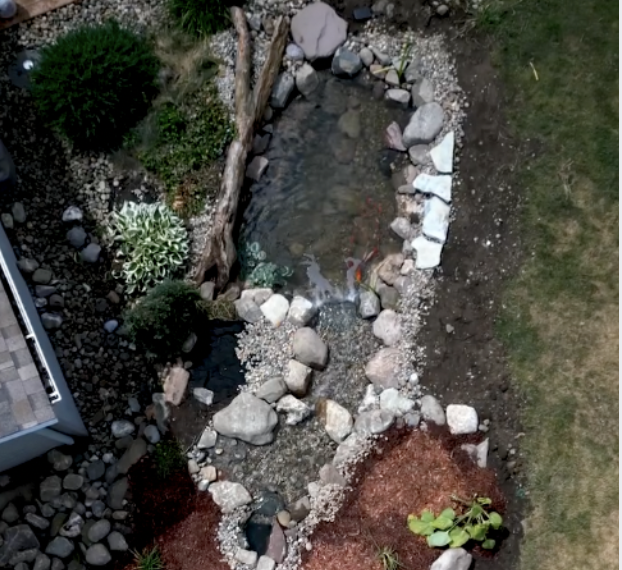
Yes, you can add a waterfall to most existing backyard ponds, including koi ponds and water gardens. Depending on how the pond was originally built, adding a waterfall may involve installing a new pump, extending plumbing, creating a waterfall spillway, or making adjustments to the existing filtration system.
You don't necessarily need to tear out your pond and start over.
In fact, adding a waterfall is one of the ways to change how an existing pond looks, sounds, and feels without completely rebuilding it.
But before choosing a waterfall design, there are a few things worth understanding about how the new feature will work with your existing pond.
Can You Add a Waterfall Without Rebuilding Your Pond?
In many cases, yes.
If your pond liner, structure, and plumbing are in good condition, a waterfall may be added without replacing the entire pond.
The biggest considerations are where the waterfall will sit, how water will reach it, and how it will return to the pond.
For example, a waterfall built along the edge of an existing koi pond may require extending the liner and creating a properly sealed connection between the new waterfall and the pond.
A larger waterfall may also require additional excavation, rockwork, plumbing, and pump capacity.
The goal is to make the new waterfall look like it belongs there while keeping the system watertight and easy to maintain.
What Types of Waterfalls Can You Add to an Existing Pond?
There are several ways to incorporate moving water into an established pond.
Natural Rock Waterfalls
Natural rock waterfalls are designed to resemble water flowing over stones in a creek or stream.
They can include a single drop, multiple cascading falls, or a longer stream that winds toward the pond.
This style works particularly well when homeowners want the new waterfall to blend into an existing landscape.
The size and height can be adjusted to fit the available space, although larger waterfalls require more water flow and construction work.
Waterfalls With a Stream
A stream creates a longer path for water to travel before entering the pond.
It can wind through landscaping, pass beneath a small bridge, or include several shallow cascades.
Adding a stream generally requires more space than a waterfall built directly along the pond's edge.
It also requires careful attention to liner connections, water containment, and circulation.
Waterfalls With a Filtration Spillway
Some pond waterfalls can incorporate a filtration component, such as a biological filter with a waterfall outlet.
This allows water to pass through filtration media before returning to the pond.
It may be a useful option when the existing pond needs both an improved waterfall and better filtration.
However, the filtration equipment still needs to be properly sized for the pond's volume, fish population, and operating conditions.
Does Adding a Waterfall Help Keep a Pond Clean?
A waterfall can improve water movement and gas exchange, but it does not replace proper pond filtration.
As water flows over rocks and returns to the pond, it can help mix the water and support oxygen exchange at the surface.
This is particularly useful in koi ponds, where circulation and oxygen availability are important.
However, adding a waterfall won't automatically remove fish waste, prevent algae, or correct an undersized filtration system.
A waterfall may be incorporated into a filtration upgrade, but the pump, filter, and circulation system need to work together.
If your pond already struggles with cloudy water or frequent filter clogging, it's worth addressing those issues during the waterfall planning process.
Learn more about our existing pond filtration upgrade services.
Do You Need a Bigger Pump to Add a Waterfall?
Possibly.
The pump needs to move enough water to create the desired waterfall appearance while overcoming the resistance of the plumbing and the height the water must be lifted.
A small trickling waterfall requires much less flow than a wide, powerful cascade.
Three factors are especially important:
Waterfall width: Wider waterfalls generally require more water to create a full, consistent flow.
Waterfall height: The higher water must be pumped, the more pressure the pump needs to overcome.
Plumbing: Pipe diameter, length, and fittings affect how much water actually reaches the waterfall.
An existing pond pump may be adequate for a small addition, but a larger waterfall may need a separate pump or an equipment upgrade.
Simply installing a more powerful pump without evaluating the filter and plumbing can create new problems.
Can You Add a Waterfall to a Koi Pond?
Yes. Waterfalls are a common feature in koi ponds and can provide both visual interest and additional water movement.
However, the waterfall should be designed with the fish and the existing pond system in mind.
A properly designed waterfall should return water to the pond without causing unnecessary water loss or creating difficult-to-clean areas.
Rock placement is also important. Poorly constructed edges can trap debris, while improperly contained splashing can lead to water loss.
If your koi pond already has a skimmer, biological filter, or other circulation equipment, the new waterfall should complement that system rather than interfere with it.
For homeowners considering a larger upgrade, a waterfall can also be incorporated into a broader koi pond renovation or filtration improvement.
How Much Does It Cost to Add a Waterfall to an Existing Pond?
The cost depends on the size of the waterfall, the complexity of the installation, and how much of the existing pond needs to be modified.
A small waterfall installed directly along the pond's edge will generally involve less construction than a long stream with multiple cascades.
Some of the biggest cost factors include:
Waterfall Size and Design
A taller or wider waterfall usually requires more rock, excavation, plumbing, and water flow.
Multiple waterfalls or a winding stream can increase the amount of construction involved.
Existing Pump and Filtration Equipment
If the current pump can support the waterfall, fewer equipment changes may be necessary.
If the system needs a larger pump, new plumbing, or filtration upgrades, those improvements will affect the project cost.
Pond Liner and Structural Changes
Connecting a new waterfall to an existing pond requires a reliable, watertight transition.
Depending on the pond's construction, this may involve modifying the liner, edging, or surrounding rockwork.
Site Access and Landscaping
Limited equipment access, steep terrain, and established landscaping can make construction more involved.
The best way to determine the cost is to evaluate the existing pond and decide what type of waterfall will work with the available space and equipment.
Can You Add a Waterfall to a Small Backyard Pond?
Yes, but the waterfall should be proportional to the pond.
A small pond doesn't necessarily need a large waterfall to create movement and sound.
A compact rock cascade or short stream may provide the effect you're looking for without overwhelming the space.
Water containment becomes especially important in smaller ponds because splashing and evaporation can affect water levels more quickly.
A smaller waterfall can still create a noticeable change in the backyard experience when it's positioned and designed thoughtfully.
Can You Add a Waterfall Without Having a Pond?
Absolutely.
If you love the sound and appearance of moving water but don't want an open pond, a disappearing waterfall, also called a pond-free waterfall, may be a better option.
Instead of flowing into a visible pond, water disappears into a concealed underground reservoir and is pumped back to the top of the waterfall.
This creates a recirculating water feature without an exposed pond at the bottom.
Disappearing waterfalls can be built as standalone features, making them a good choice for homeowners who want moving water without keeping koi or maintaining a pond ecosystem.
Explore our waterfall installation services to learn more.
Should You Add a Waterfall or Renovate the Entire Pond?
That depends on the condition of your existing pond.
If the pond is structurally sound, holds water properly, and has adequate filtration, adding a waterfall may be a relatively straightforward improvement.
But if you're already dealing with leaks, poor circulation, inadequate filtration, or deteriorating rockwork, it may make more sense to address those issues at the same time.
Combining improvements can sometimes avoid having to disturb the same areas of the pond during separate projects.
The important thing is to understand what your pond needs before construction begins.
Adding a Waterfall to an Existing Pond in Northern Indiana
A waterfall can completely change the experience of an existing backyard pond.
It adds movement, sound, and another place to enjoy the landscape. With the right design, it can also improve circulation and work alongside the pond's existing filtration system.
At Aquascapes of Michiana, we design and install custom waterfalls, koi ponds, and water features throughout South Bend, Mishawaka, Elkhart, Goshen, Warsaw, Plymouth, and surrounding Northern Indiana communities.
Whether you're considering a small cascade or a larger stream with multiple waterfalls, we can help determine what will work with your existing pond.
Contact Aquascapes of Michiana to discuss adding a waterfall to your backyard.
Frequently Asked Questions
Can you add a waterfall to an existing pond liner?
Yes, in many cases. The new waterfall liner must be properly connected to the existing pond liner to prevent leaks. The feasibility depends on the condition, material, and accessibility of the existing liner.
Do you need a separate pump for a pond waterfall?
Not always. Some existing pumps can support an added waterfall, while others may need to be upgraded or supplemented with a separate pump. The correct setup depends on the required flow, plumbing, and existing filtration system.
Will a waterfall add oxygen to my koi pond?
A waterfall can support oxygen exchange by creating water movement and surface agitation. However, the amount of benefit depends on the waterfall design and overall pond conditions. Additional aeration may still be necessary.
Can I add a waterfall to a small pond?
Yes. A compact waterfall or short rock cascade can work well with a small pond. The design should account for available space, pump flow, and water containment.
Will adding a waterfall make my pond lose water?
A properly constructed waterfall should recirculate water back into the pond. However, splashing, evaporation, and poorly contained edges can cause water loss. Careful design and installation help minimize these issues.
Is it cheaper to add a waterfall or build a new pond?
Adding a waterfall to a structurally sound existing pond is often less involved than building an entirely new pond and waterfall system. However, costs depend on the existing pond's condition and the scope of the proposed waterfall.