
Koi Fish, Koi Ponds, and Backyard Water Gardens in Northern Indiana

A homeowner’s guide to koi fish, koi pond care, and building a healthy pond ecosystem.
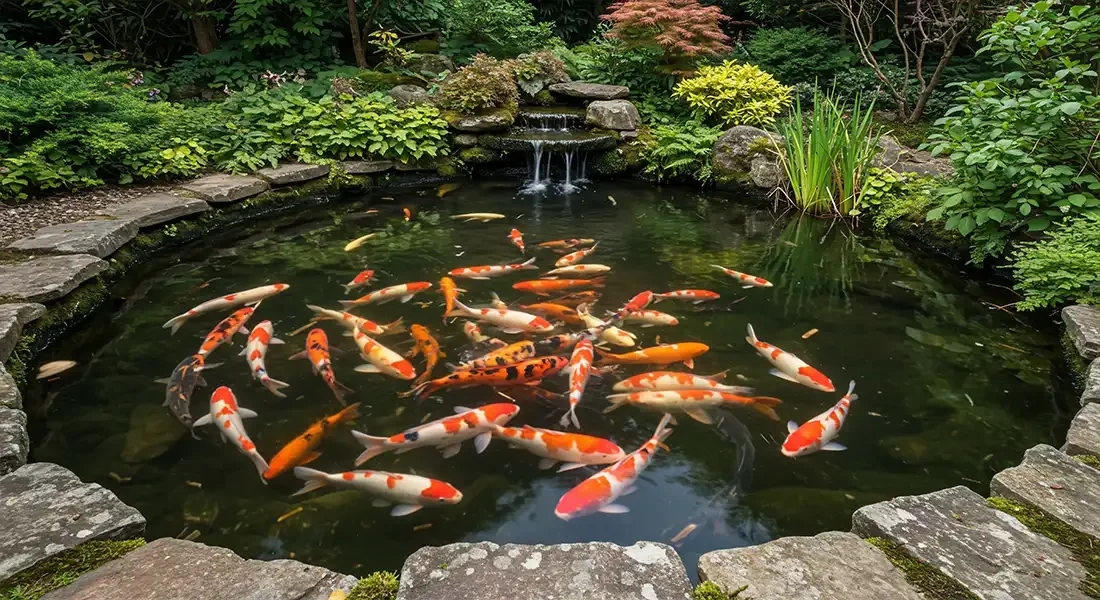
Koi fish have become one of the most recognizable and beloved pond fish in the Midwest. From peaceful backyard koi ponds to larger garden ponds with waterfalls, koi fish bring movement, color, and life to outdoor spaces across Northern Indiana.
Homeowners often start with simple questions like “What do koi fish eat?” or “How long do koi fish live?”—and quickly realize that koi ponds are part of a much larger pond ecosystem. Water quality, filtration, pond plants, algae control, and proper pond maintenance all work together to keep koi healthy and ponds clear.
This guide is written specifically for Northern Indiana pond owners—where winters freeze, summers get humid, and pond systems must be built and maintained correctly to last.
For homeowners considering a koi pond in Northern Indiana, proper design and filtration matter more than most people realize. Working with an experienced koi pond builder in Elkhart and surrounding areas helps ensure your pond thrives long-term.
What Are Koi Fish?
Koi fish (also called koi carp) are ornamental fish originally bred from common carp. Unlike feeder goldfish or small pond fish, koi are long-living, intelligent, and grow much larger than most people expect.
Koi are commonly kept in:
Backyard koi ponds
Garden ponds
Water gardens
Large decorative ponds with waterfalls
Koi fish are social, often recognize their owners, and can even be hand-fed once comfortable in their environment.
How Long Do Koi Fish Live?
One of the most searched questions about koi fish is lifespan—and for good reason.
How long can koi fish live?
In properly built koi ponds: 20–30 years
In well-maintained ecosystems: 40+ years is possible
Poor filtration or stagnant water can drastically shorten lifespan
For comparison, many homeowners also ask:
How long do goldfish live?
How long should goldfish live?
Goldfish lifespan vs koi fish lifespan
Goldfish typically live 10–15 years in ponds, while koi require deeper water, stronger filtration, and more oxygen—but reward owners with much longer lifespans.
Koi Fish vs Goldfish in Ponds
Many ponds in Northern Indiana contain a mix of koi, goldfish, and shubunkins. While this can work, it’s important to understand the differences.
Koi fish ponds require:
Deeper water (typically 2-3+ feet)
Strong filtration for heavy waste loads
Proper pond liners
Year-round circulation and oxygen
Goldfish ponds can be:
Shallower
Less demanding
Easier for beginner pond owners
If you’re searching terms like “fish pond koi,” “koi fish pond,” or “goldfish and shubunkins,” you’re likely deciding which direction your pond should go long-term.
What Do Koi Fish Eat?
Another top search: what do koi fish eat?
Koi are omnivores and need a balanced diet to maintain color, growth, and immune health.
Common koi fish food includes:
High-quality koi pellets
Seasonal wheat germ food (for cooler water)
Occasional treats like oranges, watermelon, or lettuce
Natural food from the pond ecosystem (algae, insects)
What will koi fish eat naturally?
Algae
Insects
Small aquatic organisms
However, koi cannot control algae alone, which leads many homeowners to search for:
Algae eating fish
Pond algae control
What eats algae in ponds
Algae, Stagnant Water, and Pond Health
Algae is one of the most misunderstood aspects of pond care.
Algae forms when:
Nutrients build up
Filtration is undersized
Water becomes stagnant
Beneficial bacteria are missing
Searches like “stagnant water,” “standing water,” and “pond algae control” usually indicate filtration problems—not fish problems.
Do fish eat algae?
Some fish nibble algae, but no fish will clean a pond for you.
True algae control comes from:
Proper filtration for ponds
Beneficial bacteria for ponds
Aquatic pond plants
Bog filters or wetland filtration
Correct pond maintenance routines
Pond Ecosystem Basics (Why Filtration Matters)
A koi pond is a living system, not a decorative container.
A healthy pond ecosystem includes:
Mechanical filtration (removes debris)
Biological filtration (breaks down waste)
Adequate circulation
Oxygen exchange
Aquatic plants for nutrient balance
Search terms like “filters for a pond,” “filtration for ponds,” “bog filter,” and “pond ecosystem” all point to one thing: water clarity and fish health are directly connected.
Koi Pond Plants and Aquatic Plants
Plants are not decoration—they’re functional.
Best pond plants for koi ponds include:
Water lilies (shade + beauty)
Marginal plants
Floating plants
Wetland plants in bog filters
Plants help:
Compete with algae
Improve water clarity
Create shelter for fish
Reduce nutrient buildup
Many Northern Indiana homeowners search for “water plants for ponds” or “pond flowers” after dealing with recurring algae blooms.
Backyard Koi Ponds in Northern Indiana
Northern Indiana has unique challenges:
Freeze-thaw cycles
Heavy spring rains
Hot, humid summers
Leaf debris in fall
A properly designed backyard koi pond in this region should include:
Adequate depth for winter
Bottom drains or intake bays
Year-round circulation options
Easy access for pond cleaning
DIY ponds often struggle here, which is why searches like “pond cleaning,” “pond maintenance,” and “pond cleaner”spike seasonally.
In areas like South Bend, Plymouth, and surrounding Northern Indiana communities, koi ponds must be built deeper and with proper circulation to survive winter.
Pond Maintenance and Cleaning
Regular pond maintenance keeps koi healthy and prevents costly repairs.
Typical pond maintenance includes:
Seasonal cleanouts
Filter maintenance
Water testing
Algae management
Plant care
Searches like “pond cleaning services” or “pond cleaning near me” usually come after:
Fish loss
Green water
Sludge buildup
Poor water clarity
Without proper filtration, koi ponds quickly develop stagnant water and algae issues. This is why professional pond maintenance services in Northern Indiana are critical for long-term pond health.
Pond Supplies, Stores, and Local Help
Many homeowners search:
Pond store near me
Pond supply store
Pond supplies near me
Local pond professionals understand:
Regional water conditions
Fish winterization
Proper liner installation
Long-term pond performance
If you’re in cities like Elkhart, South Bend, or Plymouth, working with a local pond contractor can make the difference between constant problems and a thriving koi pond.
Koi Pond Ideas and Design Inspiration
Popular koi pond ideas include:
Pondless waterfalls feeding koi ponds
Streams with natural stone
Backyard waterfalls
Integrated landscaping ponds
Garden waterfalls with viewing areas
Good design isn’t just visual—it controls water flow, debris collection, and long-term maintenance needs.
Can You Eat Koi Fish?
This is a surprisingly common search: “Can you eat koi fish?”
Technically, koi are carp—but they are not raised for consumption and are not recommended to eat. Koi are ornamental fish, often treated with medications and raised in decorative environments.
Cost Considerations: Koi Fish and Ponds
Searches like “how much are koi fish” or “price of koi carp” vary widely.
Koi fish prices depend on:
Size
Genetics
Color pattern
Age
Koi pond cost depends on:
Size and depth
Filtration system
Stonework and waterfalls
Accessibility for maintenance
Cheap builds often lead to expensive repairs.
Why Professional Pond Design Matters
Koi ponds are not water features you want to redo every few years.
Professionally designed ponds:
Support fish longevity
Reduce algae problems
Simplify maintenance
Increase property enjoyment
In Northern Indiana, proper construction is especially important due to seasonal extremes.
Final Thoughts: Koi Fish as a Lifestyle
Koi ponds aren’t just landscaping—they become part of daily life. Many pond owners describe sitting by the water, feeding fish, and watching seasons change as one of the most relaxing parts of their home.
If you’re researching koi fish, koi ponds, pond ecosystems, or pond maintenance, the next step is making sure your pond is built and maintained correctly for your region.
A healthy pond isn’t about fighting nature—it’s about working with it.
FAQ about koi fish
-
Koi fish commonly live 20–30 years in a properly built and maintained backyard pond. With excellent water quality, proper filtration, and good winter care, some koi can live even longer. Poor water conditions, shallow ponds, or inconsistent maintenance can significantly shorten their lifespan.
-
In Northern Indiana, a koi pond should typically be at least 2 feet deep, and often deeper depending on pond size and fish load. Adequate depth helps stabilize water temperatures, protects koi during winter freezes, and supports healthier year-round conditions.
-
Koi fish do best on high-quality koi food designed for their size and water temperature. In cooler water, wheat-germ-based food is commonly used. Avoid feeding koi bread, processed foods, or excessive treats, and reduce or stop feeding as water temperatures drop in fall.
-
Yes, koi and goldfish can live together if the pond is designed for the combined fish load. Koi grow much larger and produce more waste, so filtration and pond volume must be sized for koi, not just goldfish.
-
Green pond water is usually caused by free-floating algae, often triggered by excess nutrients, warm temperatures, too much sunlight, or insufficient filtration. Improving filtration, balancing plants, and maintaining beneficial bacteria typically resolves green water over time.
-
Koi may nibble on algae, but they do not effectively control algae growth. Long-term algae management comes from proper filtration, circulation, plant balance, and nutrient control—not from relying on fish to clean the pond.
-
Stagnant pond water is usually caused by poor circulation, undersized pumps, clogged filters, dead zones in the pond, or heavy organic buildup. Improving water movement, cleaning filters, and correcting circulation issues helps prevent stagnation.