
What Happens to Your Fish During a Professional Pond Cleaning?
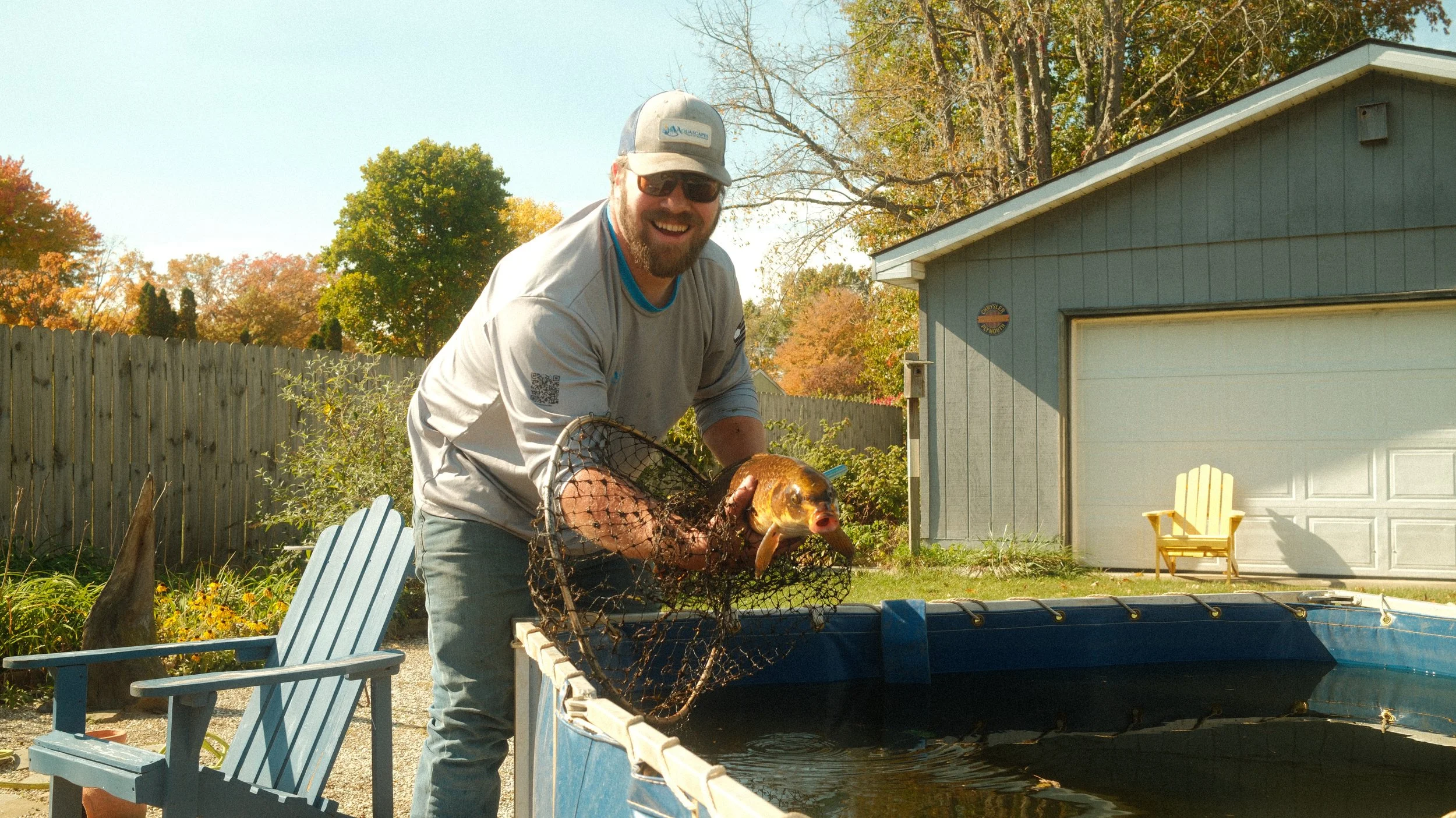
One of the most common questions pond owners ask is:
“What happens to my fish during a pond cleaning?”
It’s a fair concern. Koi and pond fish are often the centerpiece of a backyard pond, and owners want to be sure they are handled safely during maintenance.
A professional pond cleaning is designed not only to remove debris and restore water quality, but also to protect the fish that live in the ecosystem. When done correctly, the process is safe and minimizes stress on the fish.
Understanding the steps involved can help pond owners feel confident about scheduling a cleanout when their pond needs it.
Why Fish Are Removed During a Pond Cleaning
During a full pond cleanout, the pond is typically drained so debris and sludge can be removed from the bottom.
Because of this, fish are temporarily removed and placed in a safe holding environment while the pond is cleaned.
Leaving fish in the pond during a full cleanout could expose them to:
rapidly changing water conditions
low oxygen levels
debris being stirred up
potential injury during cleaning
Removing fish ensures they remain protected while the ecosystem is being reset.
Step 1: Carefully Netting the Fish
The first step in the process is gently netting the fish from the pond.
This is done slowly and calmly to avoid unnecessary stress. Professional pond contractors use proper nets and techniques designed specifically for koi and pond fish.
Handling fish properly during this step is important because koi are sensitive animals that can be easily stressed by rough handling.
Step 2: Temporary Aerated Holding Tanks
Once the fish are removed from the pond, they are placed into large temporary holding tanks.
These tanks include:
aeration to maintain oxygen levels
clean water conditions
water treatments that help protect the fish
This environment keeps fish safe and comfortable while work is being done on the pond.
Holding tanks are typically positioned close to the pond so fish can be returned once the cleaning process is complete.
Step 3: Cleaning the Pond Ecosystem
With the fish safely held in tanks, the pond itself can be properly cleaned.
A professional pond cleanout typically includes:
draining the pond
removing accumulated sludge and debris
cleaning rocks and gravel
inspecting pumps and filtration systems
trimming aquatic plants if needed
The goal is not to sterilize the pond but to remove excess buildup that has accumulated over time.
Maintaining beneficial bacteria in the ecosystem is still important for healthy water conditions.
Step 4: Refilling and Balancing the Pond
After the debris has been removed and filtration has been serviced, the pond is refilled.
At this stage, water treatments are often used to help neutralize chlorine and support healthy water conditions for fish.
The system is restarted and circulation is restored through the filtration system.
Once the water parameters are stabilized, the pond is ready for fish to return.
Step 5: Returning Fish to the Pond
Fish are slowly reintroduced back into the pond once the ecosystem is balanced again.
Because they were kept in aerated holding tanks during the process, they are able to transition back into the refreshed pond environment smoothly.
Most fish resume normal behavior shortly after being returned.
Why Professional Pond Cleanings Matter
A professional pond cleanout protects both the ecosystem and the fish that live in it.
Over time, ponds naturally accumulate:
leaves
fish waste
uneaten food
decaying plant matter
This organic material settles at the bottom and forms sludge, which can affect water quality if it is not periodically removed.
A yearly cleanout helps reset the ecosystem and keeps the pond healthy for the season ahead.
When Your Pond May Need a Cleaning
Some common signs your pond may need a cleanout include:
cloudy water that doesn’t clear up
excess sludge on the bottom
algae returning quickly
slow waterfall or stream flow
unpleasant odors
If these issues begin appearing, a professional cleaning can restore balance to the pond.
Conclusion
Fish safety is one of the most important considerations during a pond cleaning.
When handled properly, koi and pond fish can be safely removed, temporarily housed in aerated tanks, and returned once the pond ecosystem has been refreshed.
A professional cleanout not only improves water clarity and filtration performance but also helps maintain a healthy environment for fish.
-
Yes. During a full pond cleanout, fish are temporarily removed and placed in aerated holding tanks. This keeps them safe while the pond is drained and debris is removed.
-
When handled properly, stress is minimal. Professional pond contractors use gentle netting techniques and place fish in oxygenated holding tanks with treated water during the cleaning process.
-
In most cases, fish remain in holding tanks for a few hours while the pond is cleaned and refilled. Once water conditions are stabilized, the fish are safely returned to the pond.
-
Small maintenance tasks may be done without removing fish. However, a full pond cleanout typically requires temporarily removing fish so debris and sludge can be properly removed.
-
Yes, when fish are safely removed and held in aerated tanks during the cleaning process. This allows the pond to be cleaned thoroughly without exposing fish to poor water conditions.
-
Most koi ponds benefit from a professional cleanout once per year, usually in early spring before water temperatures rise and algae growth begins.
-
Over time, organic debris builds up at the bottom of the pond and forms sludge. This can lead to cloudy water, algae growth, and poor water quality for fish.
-
A professional pond cleanout typically includes draining the pond, removing sludge and debris, cleaning rocks and gravel, inspecting pumps and filtration systems, trimming aquatic plants, and safely returning fish to the pond.