
Why Is My Pond Losing Water? Troubleshooting for Homeowners in Northern Indiana
If you've noticed your pond losing water, you're not alone. This is one of the most common questions homeowners ask, especially during spring, summer, and early fall. While some water loss is completely normal, excessive water loss can indicate a problem that needs attention.
Understanding the difference between normal evaporation and a potential leak can help you protect your investment, your fish, and your overall ecosystem.
In this guide, we'll walk through the most common reasons your pond may be losing water, how to troubleshoot the issue, and when it's time to call a professional.
First: How Much Water Loss Is Normal?
Before assuming you have a leak, it's important to understand that all ponds lose some water naturally.
Typical water loss includes:
Evaporation from sun and wind
Splash from waterfalls and streams
Plants absorbing water
Minor absorption into surrounding soil (especially in new ponds)
In Northern Indiana, it's common for ponds to lose:
¼ to ½ inch per day during hot summer weather
More during windy conditions
Less during cooler months
If you're losing more than 1 inch per day, there's a good chance something else is happening.
7 Common Reasons Your Pond Is Losing Water
1. Evaporation (Most Common Cause)
During summer months in Northern Indiana, evaporation increases significantly. Several factors increase evaporation:
Direct sunlight
Wind exposure
Large surface area
Shallow pond depth
Waterfalls and streams
Water features with waterfalls tend to lose more water due to increased air exposure.
How to Check
Try the bucket test:
Fill a bucket with pond water
Place it next to your pond
Mark the water level in both
Compare after 24 hours
If both drop equally, it's likely evaporation.
If the pond drops more, you may have a leak.
2. Waterfall or Stream Leaks
This is one of the most common causes of pond water loss.
Water can escape:
Over the edges of rocks
Through low liner edges
Behind waterfalls
Into surrounding soil
Even a small shift in rocks or soil can redirect water outside the pond.
This often happens after:
Heavy rain
Freeze/thaw cycles
Animals disturbing rocks
Settling over time
Signs to Look For
Wet areas around the waterfall
Mud or soggy ground nearby
Water level stops dropping when pump is off
If the pond stops losing water when you turn off the pump, the leak is likely in the waterfall or stream.
3. Plumbing or Equipment Leaks
Sometimes water loss happens in hidden areas:
Cracked plumbing lines
Loose fittings
Damaged skimmer connections
Pump vault leaks
These leaks can be harder to identify because they're underground or concealed.
Signs to Watch
Water level drops only when pump is running
No visible wet spots
Equipment vault water level changes
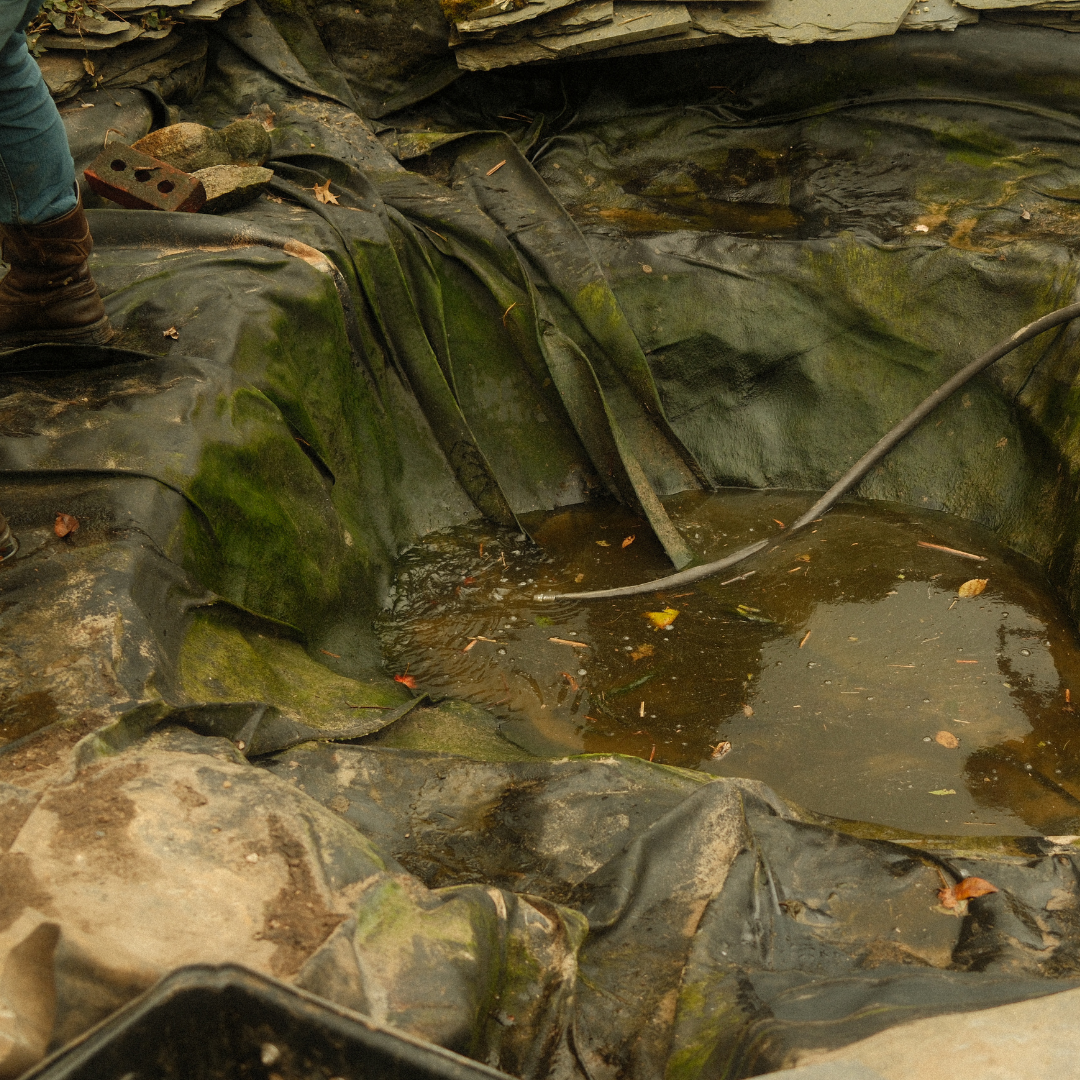
4. Liner Damage
While pond liners are durable, they can still be damaged by:
Tree roots
Sharp rocks
Animals digging
Age and wear
Small punctures can cause slow but noticeable water loss.
Common Causes in Northern Indiana
Frost movement in winter
Burrowing animals
Tree root growth
Heavy foot traffic around pond edges
5. Low Edges Around the Pond
Sometimes the pond liner edge settles over time.
This creates a low spot where water can escape.
This is especially common:
After new installations
After heavy rain
In clay soil areas
After winter freeze/thaw cycles
Water doesn't have to visibly pour out. A slow overflow can still cause significant water loss.
6. Filter or Skimmer Issues
Your skimmer or intake bay can sometimes contribute to water loss:
Low skimmer door alignment
Improper installation
Debris buildup causing overflow
Damaged skimmer seals
These issues can allow water to escape before returning to the pond.
7. Splash and Wind Drift
Waterfalls and streams naturally cause splash.
But excessive splash can lead to noticeable water loss:
High waterfalls
Steep streams
Strong wind conditions
Improper rock placement
This is often overlooked but can contribute significantly.
How to Troubleshoot Your Pond Losing Water
Here are a few simple steps homeowners can take:
Step 1: Turn Off the Pump
If water loss stops → Leak likely in waterfall or plumbing
If water continues dropping → Leak likely in pond basin
Step 2: Watch Where Water Stops Dropping
Water often stops dropping at the level of the leak.
This can help identify:
Low edges
Liner punctures
Equipment height issues
Step 3: Look for Wet Areas
Check:
Around waterfall
Around pond edges
Around equipment areas
Sometimes small wet areas reveal the issue.
Seasonal Water Loss in Northern Indiana
Certain times of year increase water loss:
Spring
Freeze/thaw movement
Settling rocks
Equipment restarting
Summer
High evaporation
Increased splash
Heavy plant growth
Fall
Leaves blocking flow
Water redirecting outside pond
Winter
Ice shifting rocks
Freeze damage
This is why many homeowners notice water loss when seasons change.
When to Call a Professional
If you notice:
Losing more than 1 inch per day
Constantly adding water
Wet areas around pond
Pump running dry
Fish acting stressed
It's time to have your pond inspected.
Leak detection often involves:
Systematic pump testing
Edge inspection
Plumbing evaluation
Water level monitoring
Catching issues early prevents:
Larger repairs
Fish loss
Equipment damage
Landscape erosion
Preventing Pond Water Loss
Regular maintenance helps prevent many issues:
Annual pond cleanouts
Seasonal inspections
Rock adjustments
Equipment checks
Plant trimming
Many leaks are caused by small changes over time, which maintenance helps catch early.
Serving Northern Indiana Pond Owners
At Aquascapes of Michiana, we help homeowners throughout:
Elkhart
South Bend
Mishawaka
Plymouth
Goshen
Wakarusa
Northern Indiana surrounding areas
Whether your pond is losing water, needs repair, or just needs inspection, we can help diagnose the issue and recommend the best solution.
Not Sure If Your Pond Has a Leak?
If you're wondering whether your pond is losing water faster than normal, we're happy to help.
Sometimes it's a simple fix. Other times, it's something that needs professional attention.
Either way, catching it early is always best.
Learn more about our pond maintenance and repair services:
Pond Maintenance Services
Pond Cleaning Services
Pond Repair Services
Or contact Aquascapes of Michiana to schedule an inspection.
FAQ: Pond Losing Water
Is it normal for a pond to lose water every day?
Yes. Most ponds lose some water due to evaporation, especially during summer. However, losing more than 1 inch per day may indicate a leak.
Should I keep adding water to my pond?
You can temporarily add water, but constant refilling may hide a leak and stress fish due to temperature and chemistry changes.
How do I know if my pond liner is leaking?
If water continues to drop with the pump off, the leak is likely in the pond basin or liner.
Can waterfalls cause water loss?
Yes. Splash, overflow, and rock movement can all cause water to escape outside the pond.
Do ponds lose more water in summer?
Yes. Heat, wind, and sun increase evaporation during summer months.