
Are Backyard Fountains Really Low Maintenance? What Homeowners Should Know
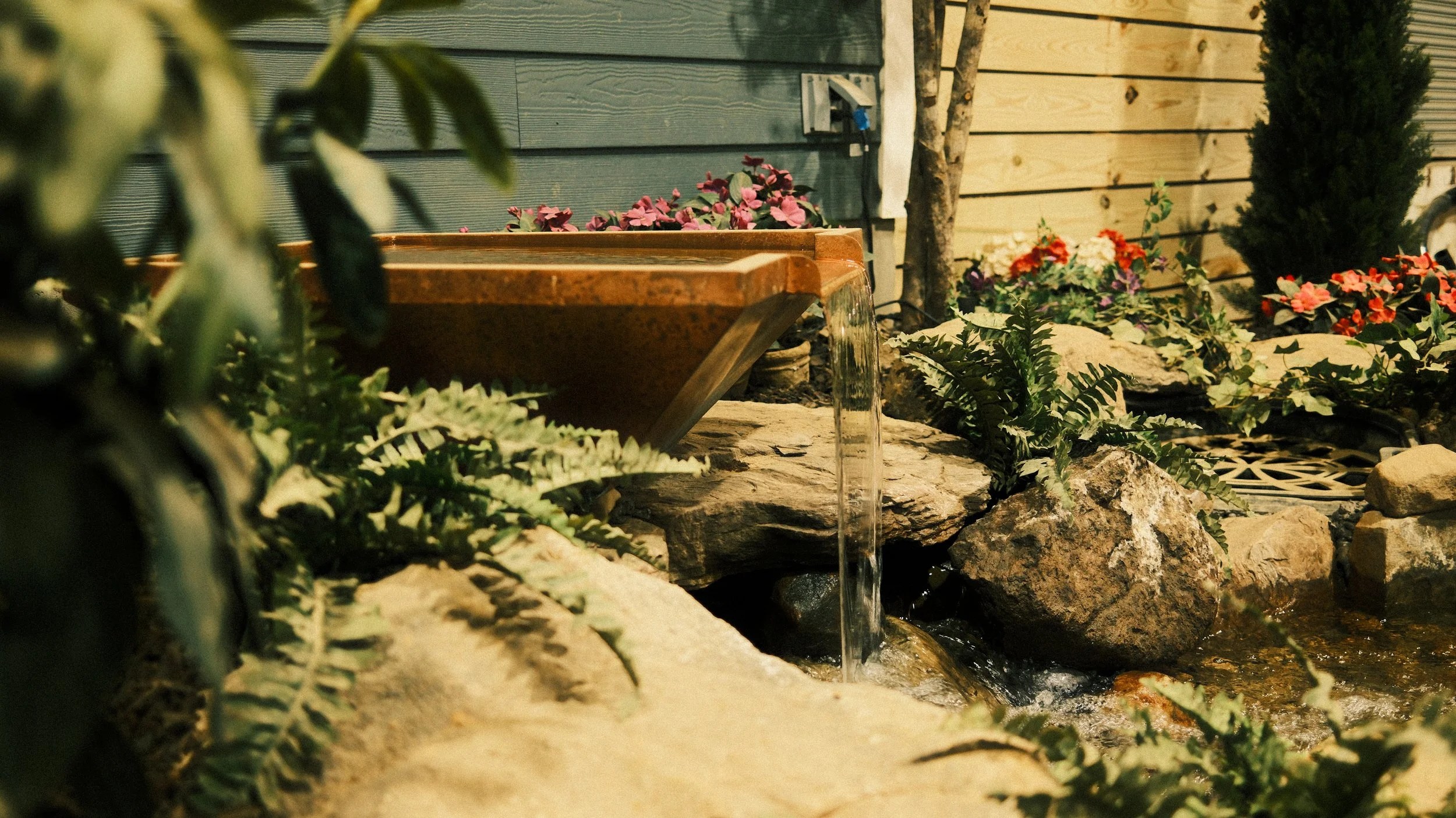
If you’ve ever thought about adding a water feature to your yard but didn’t want the upkeep of a pond, you’ve probably heard this:
“Fountains are low maintenance.”
And that’s true…
but only if they’re built the right way.
There’s a big difference between a professionally installed fountain system and a DIY kit from a big box store. Understanding that difference is what determines whether your fountain becomes something you enjoy—or something you’re constantly fixing.
What “Low Maintenance” Actually Means for a Fountain
A properly built fountain should be:
Easy to top off with water
Simple to clean occasionally
Designed to run consistently without constant adjustments
You shouldn’t be:
Taking it apart every few weeks
Replacing pumps every season
Fighting algae or debris nonstop
When a fountain is built correctly, maintenance becomes routine—not frustrating.
The Biggest Difference: Professional Systems vs DIY Fountain Kits
This is where most homeowners get surprised.
DIY Fountain Kits (Big Box Stores)
These are the fountains you’ll find at places like home improvement stores. They’re usually:
Pre-made basins with small pumps
Lightweight materials (plastic or thin resin)
Limited water capacity
Common issues:
Water evaporates quickly → constant refilling
Pumps clog easily → frequent cleaning
Materials fade, crack, or wear out
Not designed for long-term outdoor performance
They can work… but they’re typically best for:
Small decorative areas
Temporary or starter setups
Professional Fountain Systems
Companies like Aquascape and Atlantic-Oase design fountain systems very differently.
Instead of a small surface basin, they use:
Underground water reservoirs (holds significantly more water)
High-quality pumps built for continuous use
Proper filtration to reduce debris buildup
Heavier, natural materials like stone or reinforced composites
What this means for you:
Less frequent refilling
More stable water levels
Longer-lasting equipment
A more natural, integrated look
These systems are designed to run day in and day out, not just sit on a patio.
Maintenance Comparison: What to Expect
DIY Fountain
daily water refills
Pump cleaning often
Seasonal replacements
More visible wear over time
Professional Fountain
Weekly or Occasional top-off depending on weather (autofill can extend the time period)
Light seasonal cleaning
Pump maintenance (not constant replacement)
Designed for long-term use
👉 The difference isn’t whether there is maintenance
👉 It’s how often you have to think about it
Materials Matter More Than You Think
One of the biggest factors in maintenance and longevity is what your fountain is made of.
Lower-End Materials:
Thin plastic basins
Lightweight resin
Basic hardware
These tend to:
Break down faster in sun and weather
Require more frequent repairs
Look less natural over time
Professional-Grade Materials:
Reinforced basins
Natural stone or high-quality cast stone
UV-resistant components
Commercial-grade pumps
These are built to:
Handle Midwest weather
Maintain appearance over time
Support consistent water flow
👉 This is why professionally installed fountains often last years longer than DIY setups.
Why Some “Low Maintenance” Fountains Become High Maintenance
Most issues come from:
Undersized reservoirs
Improper pump sizing
Poor water circulation
Lack of filtration
When those aren’t addressed, you get:
Constant water loss
Dirty water
Pump strain
Frequent breakdowns
That’s not a fountain problem—
that’s a design problem.
Are Fountains Really Low Maintenance?
Yes—when designed correctly.
A professionally built fountain is one of the easiest ways to add:
Sound
Movement
Visual interest
…without the commitment of a full pond.
For many homeowners, it’s the perfect middle ground:
More impactful than landscaping alone
Less maintenance than a pond
More durable than a store-bought feature
Is a Fountain the Right Fit for Your Backyard?
A fountain might be a good fit if you:
Want the sound of water without fish care
Prefer something simple and clean
Have a smaller space
Want a faster install and lower commitment
If you’re looking for something more immersive (like fish, plants, and a full ecosystem), a pond may still be the better option.
Final Thoughts
Fountains can absolutely be low maintenance—
but the difference comes down to how they’re built.
A small, store-bought fountain might require constant attention.
A properly designed system is something you can simply enjoy.
If you’re considering adding a fountain and want something that lasts, it’s worth understanding the difference upfront.
Thinking About Adding a Fountain?
Aquascapes of Michiana designs and installs custom water features across Northern Indiana, including fountains, pondless waterfalls, and koi ponds.
If you’re not sure what fits your space, we can help you compare options and find something that fits your yard and your lifestyle.
📍 Serving Elkhart, South Bend, Plymouth, Mishawaka, and surrounding areas
📞 Call or request a consultation to get started
FAQ
Are backyard fountains hard to maintain?
No, most fountains are low maintenance when built with proper materials and a well-designed water system.
Do fountains need to be cleaned often?
Professional systems typically only need light seasonal cleaning, while smaller DIY fountains may require more frequent attention.
How long do backyard fountains last?
High-quality fountain systems can last many years with proper installation and maintenance, while lower-cost kits may need replacement sooner.
Do fountains use a lot of water?
No, fountains recirculate water. Larger reservoirs in professional systems reduce the need for frequent refilling.