
Summer Pond Q&A: Answers to the Most Common Questions We Receive
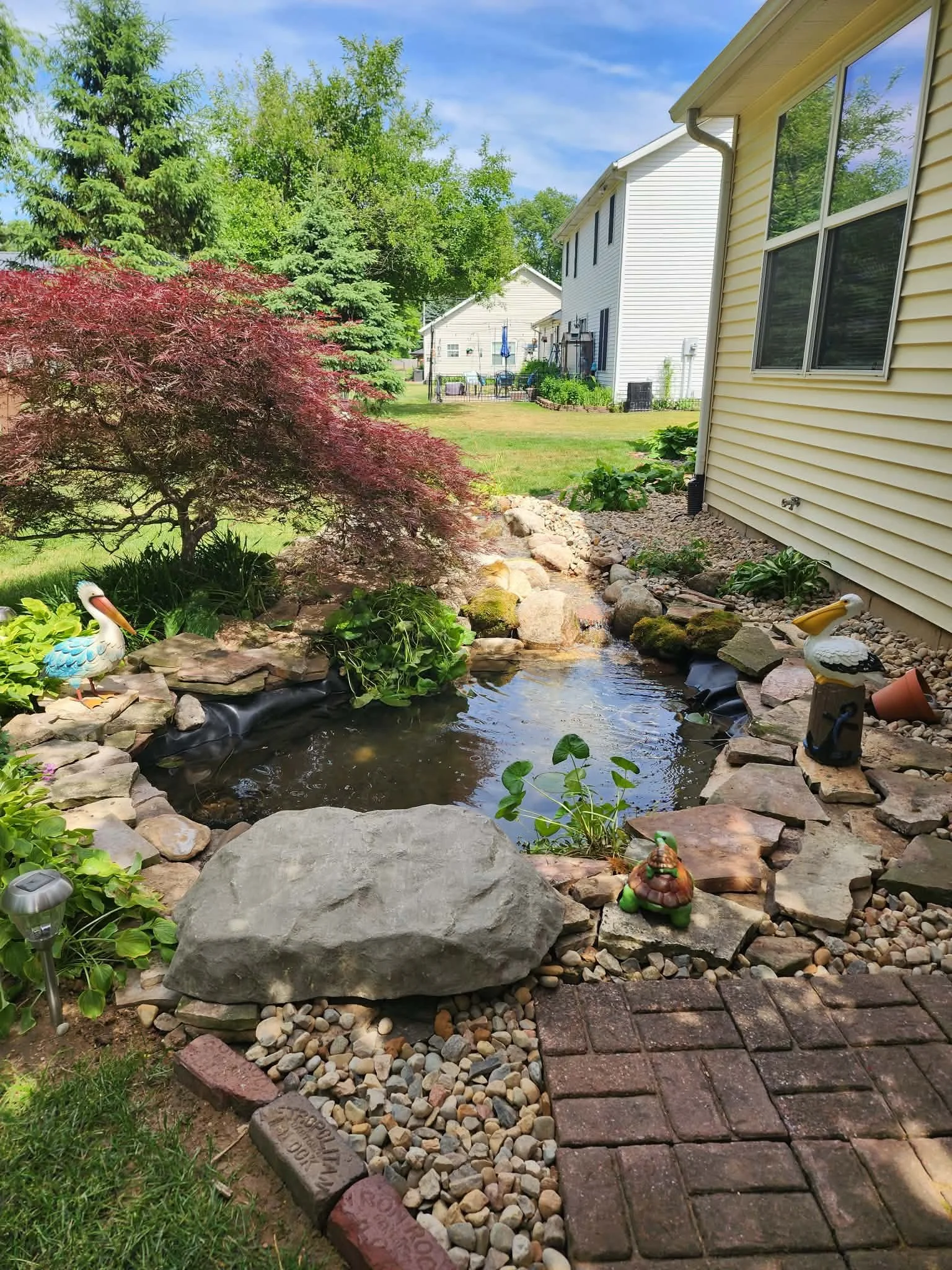
Summer is one of the best times of year to enjoy a pond. The fish are active, water lilies are blooming, waterfalls are running, and families are spending more time outdoors.
It's also the time of year when pond owners start noticing changes and asking questions. Why is the water level dropping? Is algae normal? Should I feed my fish more?
Here are answers to some of the most common questions we receive during the summer months.
Should I Feed My Fish More in Summer?
In most cases, yes.
Fish become more active as water temperatures rise, which means their metabolism increases and they require more food. Summer is typically the time of year when koi and goldfish are eating the most.
However, more food isn't always better. Only feed what your fish can consume within a few minutes. Uneaten food breaks down in the pond, contributing to excess nutrients, poor water quality, and algae growth.
Why Is My Pond Losing Water?
Some water loss during summer is completely normal.
Warm temperatures, direct sunlight, low humidity, and moving water all contribute to evaporation. Depending on the weather, a pond can lose a surprising amount of water through evaporation alone.
If you're adding water more frequently than usual, there may be another issue. Common causes include:
Excessive splash from waterfalls or streams
Water being wicked out by surrounding plants
Plumbing leaks
Settling rocks that redirect water outside the liner
If you're unsure whether your pond is experiencing normal evaporation or a leak, a professional inspection can help identify the cause.
Is Algae Normal This Time of Year?
Absolutely.
Algae is a natural part of every pond ecosystem. In fact, some algae is actually beneficial.
Problems arise when algae growth becomes excessive. Green water, long string algae, and thick mats of algae are often signs that excess nutrients are available in the pond.
Common causes include:
Overfeeding fish
Excess fish populations
Decaying leaves and debris
Insufficient filtration
Excessive sunlight exposure
The goal isn't to eliminate algae completely. The goal is creating a balanced ecosystem where algae remains under control.
Can I Add More Fish to My Pond?
Maybe.
One of the biggest mistakes pond owners make is determining fish capacity based on pond size alone. The real limiting factor is often filtration.
A pond with excellent filtration may support more fish than a larger pond with inadequate filtration. Every fish produces waste, which increases the demand on the pond's biological system.
Before adding fish, consider:
Pond size
Existing fish population
Filtration capacity
Water quality
Long-term fish growth
Remember that small koi don't stay small forever.
Does My Waterfall Need to Run All the Time?
We recommend continuous circulation whenever possible.
Your pump and waterfall do much more than create visual appeal. They help oxygenate the water, support beneficial bacteria, improve filtration efficiency, and maintain overall water quality.
Turning a waterfall off for extended periods can reduce oxygen levels and disrupt biological filtration.
During hot summer weather, continuous circulation becomes even more important.
What's the Most Important Summer Pond Maintenance Task?
Consistency.
Many pond problems develop slowly over time rather than appearing overnight.
Regular maintenance should include:
Emptying skimmer baskets
Removing excess debris
Cleaning filters when needed
Monitoring water levels
Observing fish behavior
Managing aquatic plants
A few minutes of attention each week can prevent many of the larger issues that lead to costly repairs or renovations later.
Enjoy Your Pond This Summer
A healthy pond should be something you enjoy—not something that causes stress.
Understanding how your pond functions helps you spot potential issues early and keep your ecosystem thriving throughout the hottest months of the year.
If you have questions about your pond, filtration system, fish population, water quality, or maintenance needs, we're always happy to help.
At Aquascapes of Michiana, we specialize in pond maintenance, cleanouts, renovations, koi ponds, waterfalls, and water feature construction throughout Northern Indiana.