
Pond Repair Warning Signs: When a Small Issue Becomes an Expensive Fix
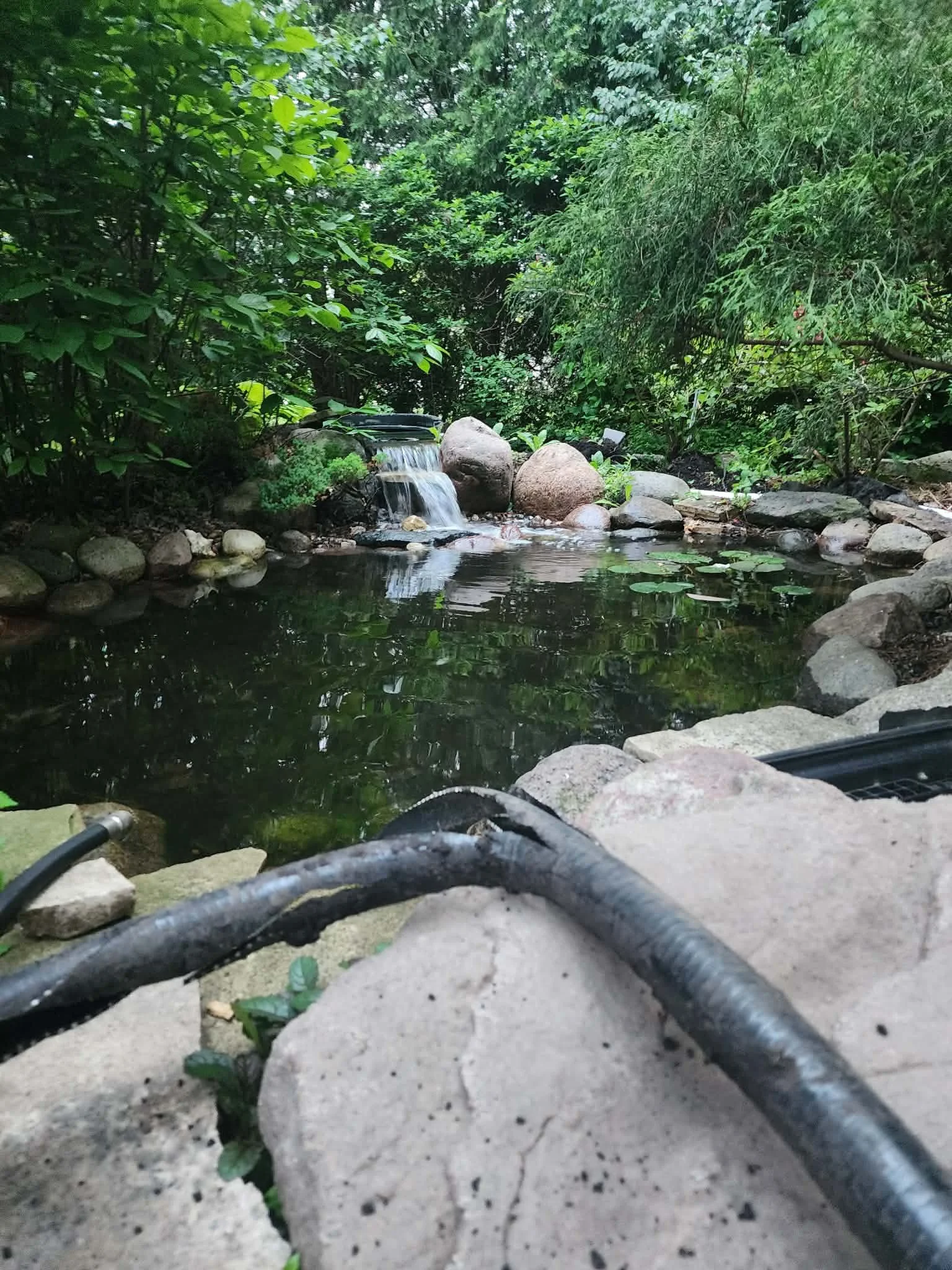
Many pond owners assume that if their pond still has water in it, everything is working as it should. Unfortunately, some of the most expensive pond repairs start as small issues that are easy to overlook.
A waterfall that seems slightly weaker than usual. A pump that sounds a little louder than normal. A few rocks that appear to have shifted after winter. These may seem minor, but they can be early warning signs of larger problems developing beneath the surface.
At Aquascapes of Michiana, we've repaired and renovated ponds throughout Northern Indiana that could have been fixed for a fraction of the cost if the issues had been caught sooner. Understanding the warning signs can help protect your investment, keep your fish healthy, and prevent small repairs from turning into major reconstruction projects.
Why Pond Problems Rarely Fix Themselves
Unlike many parts of your landscape, a pond is a living ecosystem. Water is constantly moving through pumps, plumbing, filtration systems, waterfalls, streams, and biological filters. Every component depends on the others to function properly.
When one part begins to fail, it often creates a chain reaction.
A clogged filter can strain a pump. A struggling pump can reduce circulation. Reduced circulation can lead to algae growth and poor water quality. Poor water quality can stress fish and damage beneficial bacteria populations.
By the time many homeowners notice a major issue, the original problem has often existed for months.
Warning Sign #1: Reduced Waterfall Flow
One of the easiest signs to spot is a waterfall that appears weaker than normal.
If your waterfall once produced a strong, consistent flow but now seems sluggish, something is restricting water movement through the system.
Common causes include:
Clogged pump intake
Dirty skimmer baskets
Debris accumulation in plumbing
Failing pump components
Blocked filter media
Many homeowners assume they simply need more water in the pond. While low water levels can contribute to poor flow, they are often not the root cause.
Reduced circulation places additional stress on every component of the ecosystem and should be investigated before it worsens.
Warning Sign #2: Pump Noise That Wasn't There Before
A healthy pond pump should operate quietly.
Grinding sounds, rattling, humming, or excessive vibration are signs that something is wrong.
Potential causes include:
Worn bearings
Debris entering the impeller
Air entering the system
Electrical issues
Aging pump components
A pump that continues operating while making unusual noises may still appear functional, but it could be approaching failure.
Replacing a worn impeller is significantly less expensive than dealing with a complete pump failure that affects the entire pond system.
Warning Sign #3: Excessive String Algae
Some algae is natural and expected in every ecosystem pond.
However, excessive string algae growth can indicate that the pond's filtration system is no longer functioning efficiently.
Common underlying causes include:
Insufficient circulation
Dirty filters
Aging UV systems
Nutrient buildup
Poor plant coverage
Many homeowners focus solely on treating the algae itself. While treatments may provide temporary relief, they rarely address the reason the algae appeared in the first place.
When algae suddenly becomes much worse than previous years, it may be signaling a larger filtration issue.
Warning Sign #4: Rocks Beginning to Shift or Settle
Natural-looking ponds rely on carefully placed stonework.
Over time, freeze-thaw cycles, erosion, soil movement, and water flow can cause rocks to shift from their original positions.
Watch for:
Gaps appearing between stones
Leaning boulders
Exposed liner edges
Water flowing in unintended directions
Stream edges collapsing
Small shifts often become larger structural issues if ignored.
What begins as a cosmetic concern can eventually lead to water loss, liner exposure, and expensive reconstruction.
Warning Sign #5: Exposed Pond Liner
Your liner should rarely be visible.
When portions of the liner become exposed, several problems can occur:
UV damage from sunlight
Increased deterioration
Unnatural appearance
Greater risk of punctures
Water escaping around edges
Exposed liner often indicates rock movement, soil settling, or edge erosion.
Addressing the issue early may only require repositioning stonework. Waiting too long can lead to more extensive repairs.
Warning Sign #6: Fish Showing Signs of Stress
Your fish can often reveal problems before equipment does.
Watch for behaviors such as:
Gasping near waterfalls
Staying near the surface
Lethargic swimming
Reduced appetite
Isolation from the group
These symptoms can indicate:
Poor oxygen levels
Reduced circulation
Filtration problems
Water quality issues
Equipment failures
Healthy fish are active, alert, and consistently engaged with their environment.
Behavior changes should never be ignored.
Warning Sign #7: Wet Areas Around the Pond
Not every wet spot means you have a leak.
However, consistently damp areas around the pond perimeter can indicate:
Splash-out from waterfalls
Settling edges
Plumbing issues
Overflow problems
Hidden water loss
These issues often begin gradually and become worse over time.
A professional inspection can determine whether the problem involves a true leak or another repair issue.
Warning Sign #8: Increased Maintenance Requirements
Many pond owners become accustomed to slowly increasing maintenance demands.
If you're cleaning filters more often than before, removing more algae, or constantly adjusting water levels, your pond may be trying to tell you something.
A properly functioning ecosystem pond should become more stable over time.
When maintenance requirements suddenly increase, it often indicates an underlying issue that needs attention.
Warning Sign #9: Murky Water That Doesn't Improve
Temporary cloudiness after storms or heavy rainfall is normal.
Water that remains consistently cloudy despite proper maintenance is not.
Potential causes include:
Inadequate filtration
Failing pumps
Insufficient biological activity
Excess fish load
Aging equipment
Persistent water quality issues often point to system performance problems rather than simple maintenance concerns.
Warning Sign #10: Aging Equipment
Many pond components operate reliably for years before problems become obvious.
Unfortunately, equipment failures rarely occur at convenient times.
If your pond system is approaching ten years old, it may be worth having key components inspected before peak season.
Preventative replacement is often far less expensive than emergency repairs.
Why Delaying Repairs Often Costs More
One of the biggest mistakes homeowners make is assuming a small issue can wait until next season.
In reality, many pond problems compound over time.
For example:
A partially clogged pump works harder and wears out faster.
Reduced circulation encourages algae growth.
Excess algae increases maintenance.
Water quality declines.
Fish become stressed.
Filtration struggles even more.
What may have started as a simple service call can eventually require extensive repairs.
When Should You Call a Pond Professional?
If you notice any of the warning signs above, a professional inspection can often identify the root cause before significant damage occurs.
The best time to address a pond issue is usually when it first appears—not after it becomes an emergency.
An experienced pond contractor can evaluate:
Pump performance
Filtration efficiency
Plumbing condition
Rock stability
Water quality
Fish health indicators
Structural concerns
Many repairs are surprisingly straightforward when caught early.
Protecting Your Investment
A professionally built pond is one of the most enjoyable features a homeowner can add to their property. It creates a gathering place, attracts wildlife, and provides year-round beauty.
Like any investment, however, it benefits from routine inspections and timely repairs.
If your pond isn't performing the way it used to, don't assume it's simply aging. Small changes often signal larger issues developing behind the scenes.
By recognizing the warning signs early, homeowners can avoid major repairs, extend the life of their equipment, and continue enjoying a healthy, beautiful pond for years to come.
If you're experiencing any of these warning signs, Aquascapes of Michiana provides pond repair, leak detection, filtration upgrades, and maintenance services throughout Northern Indiana. A professional inspection today could prevent a much larger repair tomorrow.