
How Deep Should a Koi Pond Be in Northern Indiana?
If you're planning a koi pond in Northern Indiana, you've probably come across a lot of conflicting advice about depth.
Two feet. Three feet. Four feet. Some sources will even tell you that koi can't survive a northern winter unless they're living in an extremely deep pond.
That's not necessarily the case.
At Aquascapes of Michiana, we recommend a minimum maximum depth of about 2 feet for a properly designed koi pond. Going to 3 feet can absolutely have benefits, especially if you want more swimming room for larger koi and additional protection from predators, but a 3-foot pond isn't required simply because you live in Northern Indiana.
The bigger picture matters.
Pond depth works together with water volume, filtration, circulation, oxygenation, fish load, and winter preparation to create a healthy environment for koi.
Quick Answer: How Deep Should a Koi Pond Be?
For most koi ponds in Northern Indiana, we recommend providing an area approximately 2 feet deep. A 3-foot depth can provide additional swimming space, temperature stability, and predator protection, but isn't necessary for every koi pond.
| Pond Depth | Our Recommendation |
|---|---|
| Less than 2 feet | Usually too shallow for the primary area of a dedicated koi pond. |
| About 2 feet | Our recommended starting point for most residential ecosystem koi ponds. |
| About 3 feet | An excellent option for more swimming room, water volume, and additional predator protection. |
| 4+ feet | Can work well for certain designs and koi enthusiasts, but isn't automatically necessary or better. |
The right koi pond depth depends on the complete pond design, not depth alone.

Why Do We Recommend 2 Feet?
Two feet provides enough depth to create a substantial body of water without turning the pond into a deep hole that's difficult to interact with.
And interaction matters.
One of the things we love about koi ponds is how connected homeowners become to their fish. You walk toward the edge and they come swimming over. Kids and grandkids sit on the rocks to feed them. You can actually see the colors and patterns of individual koi as they move through the pond.
That's part of the experience.
A well-designed 2-foot-deep ecosystem pond can provide koi with the space they need while still allowing the pond to feel approachable and connected to the surrounding landscape.
It also gives us room to incorporate different elevations throughout the pond rather than simply excavating one deep bowl.
Does a Koi Pond Need to Be 3 Feet Deep?
No. A koi pond doesn't have to be 3 feet deep to successfully keep koi in Northern Indiana.
This is one of the most common pieces of advice homeowners encounter online.
Three feet is certainly a good pond depth. In fact, there are situations where we'd recommend it.
But there's a big difference between saying:
"Three feet has benefits."
and
"Your koi will die if your pond isn't three feet deep."
The second statement simply doesn't reflect how properly designed ecosystem ponds can function.
We've found that 2 feet is a practical starting depth for many residential koi ponds. Going another foot deeper becomes a design choice based on your fish, property, budget, and how you want to experience the pond.
What Are the Benefits of a 3-Foot-Deep Koi Pond?
If your budget and property allow it, moving from 2 feet to approximately 3 feet can have some real advantages.
More Room for Koi
Koi can become substantial fish.
That little koi you bring home doesn't necessarily stay little.
Additional depth gives larger fish more vertical swimming space and creates another dimension to their environment.
More Water Volume
Increasing depth can substantially increase the total gallons in a pond without making the footprint significantly larger.
More water volume generally means environmental changes happen more gradually.
Additional Predator Protection
Herons and other predators tend to have an easier time hunting fish in shallow water.
Deeper areas give koi another place to retreat when they feel threatened.
A Different Viewing Experience
There's also something beautiful about watching koi appear from deeper water and rise toward you.
For homeowners who really enjoy the fish-keeping side of the hobby, that alone can make the additional depth worthwhile.
| Consideration | 2-Foot Koi Pond | 3-Foot Koi Pond |
|---|---|---|
| Suitable for Koi | Yes | Yes |
| Northern Indiana Winters | Yes, when properly designed | Yes, when properly designed |
| Fish Visibility | Excellent | Excellent |
| Swimming Space | Good | More vertical swimming space |
| Water Volume | Good | Greater |
| Predator Refuge | Good with proper design | Additional protection |
| Excavation | Less | More |
| Best For | Most residential ecosystem koi ponds | Homeowners wanting more depth and fish space |
Neither depth replaces proper filtration, circulation, oxygenation, or winter preparation.
Neither depth replaces proper filtration, circulation, or winter preparation.
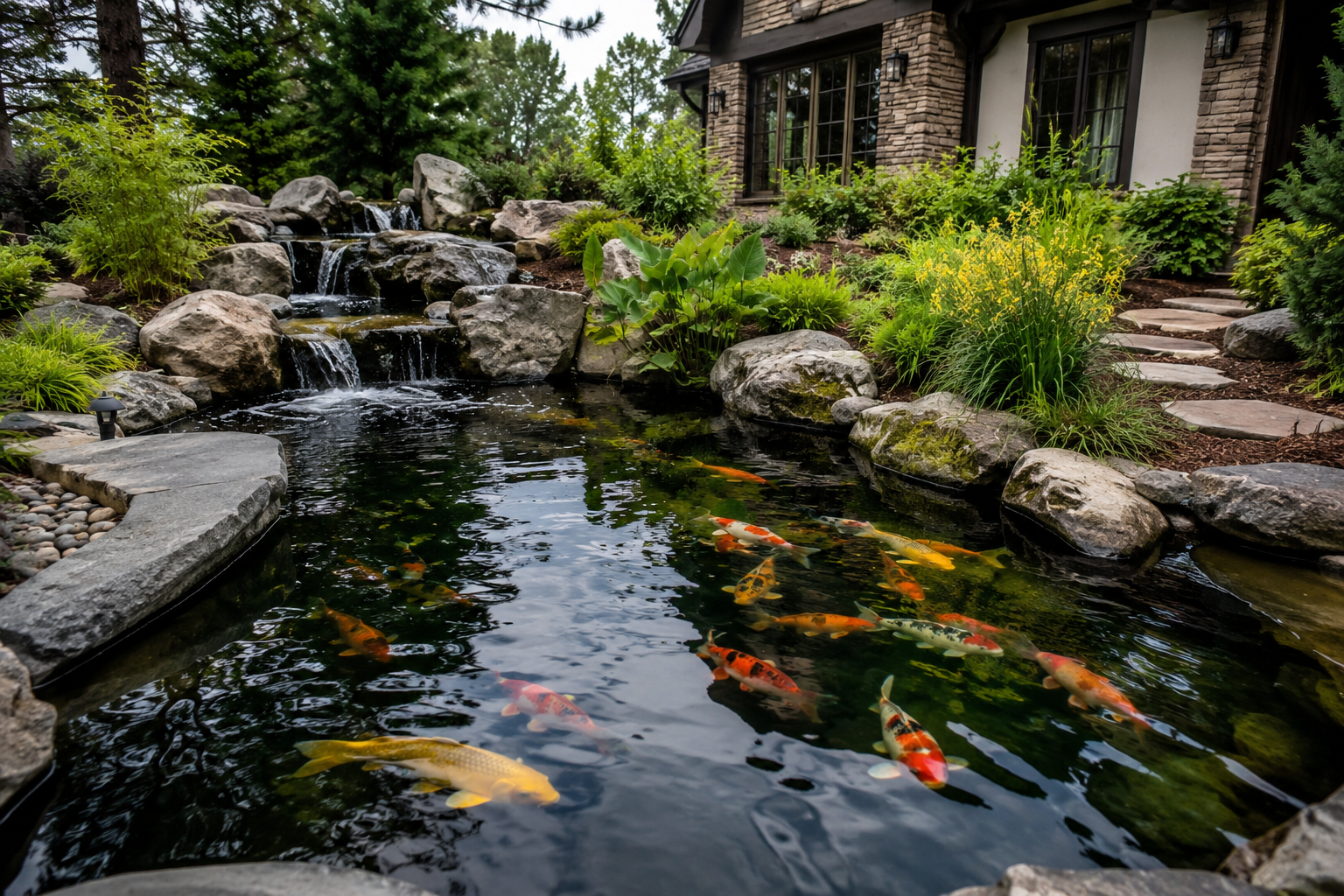
What About Northern Indiana Winters?
This is where most of the confusion about koi pond depth comes from.
Northern Indiana gets cold.
Ponds freeze.
That understandably makes homeowners nervous about leaving koi outdoors.
But a frozen surface doesn't mean the entire pond has become a block of ice.
Koi are cold-blooded. As the water temperature falls, their metabolism slows dramatically. They become less active, eat less, and eventually settle into a quiet winter state.
A properly designed pond allows them to remain outdoors through that process.
Depth certainly plays a role, but depth isn't the entire winterization strategy.
Gas exchange, oxygen, water movement, fish load, equipment, and how the pond is managed during winter all matter.
That's why we'd rather design the entire ecosystem correctly than simply dig another foot deeper and assume we've solved winter.
Can Koi Survive Under Ice?
Yes, provided the pond is properly designed and managed.
The concern isn't necessarily having ice on the pond.
The bigger issue is allowing the surface to become completely sealed for an extended period.
Organic material continues breaking down beneath the water, even during winter. Fish are still alive and respiring, although at a much slower rate. Maintaining appropriate gas exchange is therefore important.
Depending on the pond and how it's operated through winter, aeration or other winter equipment can help maintain an opening.
And here's an important point:
Never break thick pond ice by repeatedly hitting it.
The shock waves can stress fish below.
Winter pond care should be planned before the pond freezes, not improvised after several inches of ice have already formed.
A Koi Pond Doesn't Need to Be the Same Depth Everywhere
This is something that gets lost when people talk about "pond depth."
A natural-looking ecosystem pond isn't necessarily 2 feet deep from one edge to the other.
We can create different elevations.
Shallower shelves around portions of the perimeter provide areas for aquatic plants and help transition naturally from the surrounding landscape into deeper water.
Rock placement creates additional structure.
Then the deeper portion gives koi plenty of room to swim.
Think about a natural lake.
You don't step off the shoreline into one uniform depth.
The bottom changes.
We can use that same idea on a much smaller scale to create a pond that's more interesting both above and below the surface.
A Typical Pond Profile Might Look Something Like This:
Shoreline → Planting Shelf → Intermediate Area → 2–3' Fish Area → Intermediate Area → Shoreline
That variation gives us far more design flexibility than simply excavating a giant bowl.
Is a Deeper Pond Easier to Maintain?
Sometimes, but don't confuse depth with good design.
Additional depth creates more water volume, and greater water volume can help moderate temperature and other environmental changes.
But making a poorly designed pond deeper doesn't suddenly make it low maintenance.
A 4-foot-deep pond with inadequate filtration can still have problems.
So can a pond with poor circulation, too many fish, excessive organic debris, or improperly sized equipment.
If your goal is low maintenance, we'd prioritize the complete ecosystem:
Proper filtration + circulation + biological activity + appropriate fish load + good construction
Depth supports that system.
It doesn't replace it.
Does Filtration Change Based on Pond Depth?
Filtration should be designed around the entire pond.
Total water volume matters, but so does fish load, circulation, waterfall design, plumbing, and the type of filtration system being used.
Koi produce waste.
And as those little koi grow into much larger fish, the biological load on the pond increases with them.
That's why we don't recommend choosing a pump or filter based solely on the dimensions printed on the side of a pond kit.
A professionally designed koi pond should consider how the pond will function years from now, not just the amount of water in it on installation day.
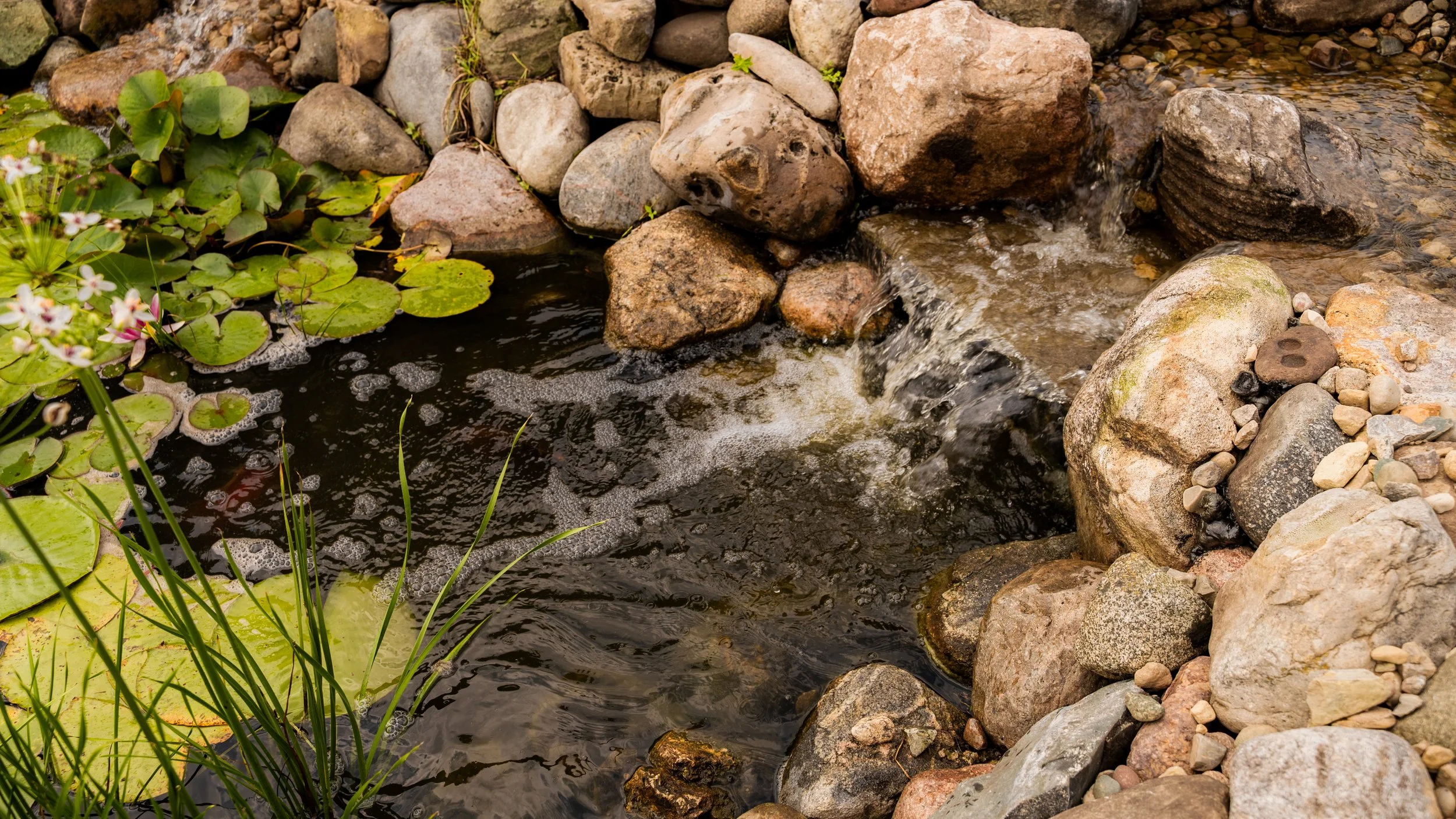
What Happens if a Koi Pond Is Too Shallow?
Shallow water isn't inherently bad.
We intentionally create shallow areas in ecosystem ponds.
The issue is having only shallow water.
Very shallow ponds generally have less water volume, which means environmental conditions can change more quickly. They can warm faster during summer and provide fish with fewer options when they want to retreat from heat or predators.
Predator access becomes another consideration.
A heron standing along a shallow shoreline has a much easier opportunity than one trying to reach koi that can retreat into deeper water.
That's why we like variation.
Shallow areas have a purpose.
So do deeper ones.
Is 4 Feet Better Than 3 Feet?
Not automatically.
There's a point where homeowners begin adding depth simply because they've heard "deeper is better."
But every additional foot changes the project.
There's more excavation.
More soil to remove.
More water volume.
Potentially different construction considerations.
And the way you interact with the pond can change.
There are absolutely projects where a deeper koi pond makes sense. A serious koi hobbyist may have very different priorities from a family that wants a natural ecosystem pond beside the patio.
That's why we don't believe in choosing depth from an internet rule.
Design the pond around the people and fish that are actually going to use it.
What Depth Is Best for Your Koi Pond?
For most homeowners we work with in Northern Indiana, 2 feet is a good recommended starting depth.
If you're especially interested in keeping larger koi, want additional water volume, prefer a deeper viewing experience, or want more predator refuge, 3 feet may be worth considering.
Going deeper than that becomes increasingly project-specific.
The question shouldn't simply be:
"How deep can we make it?"
A better question is:
"What depth makes the most sense for this pond?"
That's where pond size, fish, filtration, property conditions, budget, and how you want to enjoy the water all come together.
Koi Pond Depth in Northern Indiana: The Bottom Line
If you remember one thing from this article, make it this:
A koi pond in Northern Indiana does not have to be 3 or 4 feet deep simply because our winters get cold. A properly designed ecosystem koi pond can successfully keep koi with a deeper area of approximately 2 feet. Going to 3 feet provides additional swimming room, water volume, and predator protection and can make the pond even more enjoyable, but it isn't a requirement for every pond.
Depth matters.
But good pond design matters more.
At Aquascapes of Michiana, we design koi ponds around the complete environment rather than one arbitrary measurement. That means considering the fish, filtration, circulation, property, Northern Indiana climate, and most importantly, how you want to experience your pond.
Because ultimately, you're not building a two-foot pond or a three-foot pond.
You're building a place you're hopefully going to enjoy for years.
Frequently Asked Questions About Koi Pond Depth
What is the minimum depth for a koi pond in Northern Indiana?
Aquascapes of Michiana generally recommends providing a deeper area of approximately 2 feet for a properly designed residential ecosystem koi pond. The ideal depth can vary based on the overall pond design, fish population, filtration, and property.
Does a koi pond have to be 3 feet deep?
No. Three feet can provide additional swimming room, water volume, and predator protection, but it isn't required for every koi pond. A properly designed 2-foot-deep ecosystem pond can successfully house koi in Northern Indiana.
Can koi survive winter in a 2-foot-deep pond in Indiana?
Yes, koi can overwinter in a properly designed pond with an approximately 2-foot-deep area. Pond depth is only one consideration. Oxygenation, gas exchange, fish load, circulation, and proper winter preparation also matter.
Is a deeper koi pond better?
Not necessarily. Additional depth provides benefits, but deeper isn't automatically better. The ideal depth should work with the pond's size, filtration, fish population, property, and how the homeowner wants to interact with the water.
Should the entire koi pond be 2 feet deep?
Not necessarily. Ecosystem ponds can incorporate shallower shelves for aquatic plants and natural transitions while providing a deeper area for koi.
How deep should a koi pond be to protect fish from herons?
There isn't one depth that guarantees predator protection. Deeper areas give koi more room to retreat, and moving from approximately 2 feet to 3 feet can provide additional protection. Pond shape, rock placement, fish hiding areas, and other design elements also matter.